Category

Blogging

The Insurance Company Closed Your Claim — Your Right to Compensation May Still Be Open

The Insurance Company Closed Your Claim — Your Right to Compensation May Still Be Open

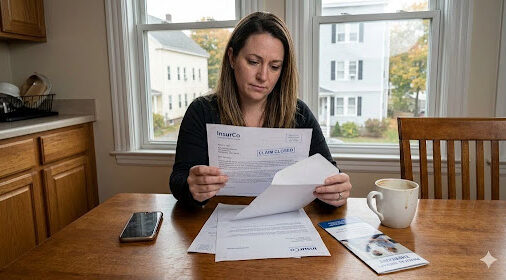
The letter says your claim is closed. That does not mean your case is over.

I’ve watched this moment play out more times than I can count — someone opens an envelope, reads two lines of insurance-department language, and concludes that the system has made its final ruling. They call me in a quiet panic. “So that means it’s over, right?” It’s never the first question I want to answer, because the real answer requires a little context. But the short version is this: an insurance company closing a file is an administrative decision. It is not a court order. It is not a legal deadline. And in Massachusetts, it almost certainly does not extinguish your right to pursue compensation.

Let me walk you through what that actually means.

What ‘Claim Closed’ Actually Signals — and What It Doesn’t

Picture this: Maria, a 38-year-old nurse from Worcester, rear-ended at a red light in January. She filed a claim, started physical therapy, and then three months later got a letter saying her claim was closed. She assumed she’d missed some window. She hadn’t.

What happened to Maria is routine. Insurers close files for all kinds of internal reasons — a payment was issued, a coverage period lapsed, an adjuster moved on, or the company simply decided it had done what it was obligated to do under the policy. None of those reasons automatically terminate your legal rights under Massachusetts law.

Here’s the distinction that matters:

What the Insurer Controls What Massachusetts Law Controls
Their internal claim file Your right to file a lawsuit
When they stop paying under the policy The three-year statute of limitations
Their adjuster’s fault assessment The comparative fault standard under MGL Ch. 231
Whether they close a PIP claim Your ability to pursue a liability claim

When an adjuster closes a file, they’re ending their internal process. They are not — and cannot — close the courthouse door.

This is especially important in Massachusetts because of how the state’s no-fault insurance system is structured. You may have multiple potential sources of compensation still available to you, and a closed claim file doesn’t touch most of them.

How No-Fault Insurance and PIP Actually Work Here

Massachusetts is a no-fault state. After an accident, your own insurance company pays your initial medical bills and a portion of lost wages through Personal Injury Protection (PIP) — regardless of who caused the crash. The current PIP limit under Massachusetts General Laws Chapter 90, Section 34M is $8,000 per person. 

That coverage is meant to get you through early treatment quickly, without waiting for fault to be sorted out. But here’s where people get confused.

When an insurer closes a PIP claim — often because the $8,000 limit has been reached or because they’ve decided your treatment is no longer “necessary” — many people assume that’s the end of the money. It isn’t.

PIP is the floor, not the ceiling.

Once your medical expenses exceed $2,000 — the tort threshold under Massachusetts General Laws Chapter 231, Section 6D — Massachusetts law allows you to step outside the no-fault system entirely  and pursue a liability claim against the at-fault driver. That’s a separate legal pathway, and it doesn’t disappear because your PIP file got stamped closed.

The liability claim is where the real numbers come into play:

  • Economic damages — medical bills beyond what PIP covered, future treatment costs, lost wages, out-of-pocket expenses
  • Non-economic damages — pain and suffering, loss of enjoyment of life, the ongoing impact of your injuries on daily functioning

These categories can represent significantly more than any PIP payment. They’re recoverable through a personal injury claim against the responsible driver’s liability insurance, or through your own underinsured motorist coverage if the other driver didn’t carry enough.

If you’re unsure whether your situation qualifies to step outside no-fault, a massachusetts personal injury lawyer can review your specific facts and tell you quickly — most do this at no charge.

How Comparative Fault Affects Your Recovery

One thing I hear from callers is a quiet fear: “But I might have been partly at fault.”

Worth addressing directly. Massachusetts uses a modified comparative fault rule — General Laws Chapter 231, Section 85 — under which contributory negligence does not bar recovery as long as the plaintiff’s share of fault does not exceed the defendant’s, with damages reduced proportionally. You can recover compensation even if you were partially responsible for the accident, as long as your share of fault is 50% or less.  Your recovery is simply reduced by your percentage of fault.

Here’s how that plays out with real numbers:

You were found 20% at fault — maybe you were slightly over the speed limit. Your total damages are $50,000. You recover $40,000. You don’t lose everything because you weren’t perfect.

The rule only bars recovery if you were more than 50% responsible. Insurance adjusters sometimes imply — or outright suggest — that shared fault means you have no claim. That framing benefits them. The actual legal standard is more nuanced, and in my experience, fault percentages are often disputed and negotiable.

Don’t accept an adjuster’s fault assessment as the final word any more than you’d accept their claim closure as the final word.

The Deadline That Actually Matters

If there’s one place where “too late” can become genuinely real, it’s here.

Massachusetts General Laws Chapter 260, Section 2A gives you three years from the date of the accident to file a personal injury lawsuit. Miss that window, and the courthouse door does close — for real this time.

Three years sounds like a long time. It isn’t, once you factor in what needs to happen before a lawsuit is filed:

  1. Gathering medical records and bills
  2. Establishing the full scope of your injuries
  3. Calculating future damages
  4. Identifying all liable parties
  5. Attempting negotiation first

Attorneys typically want several months of runway before a deadline arrives. There are some limited exceptions — the clock can be paused in certain circumstances involving minors or discovery of delayed injuries — but you should not count on an exception applying to your situation without legal advice.

The practical takeaway: a closed insurance file doesn’t reset your statute of limitations clock, and it doesn’t extend it either. The three-year period runs from the accident date, period. If you received a closure notice six months after your crash, you likely have more than two years remaining. That’s meaningful time — but it moves faster than people expect when they’re still in treatment and trying to get back to normal life.

Your Most Common Questions, Answered Directly

Can they close my claim while I’m still treating?

Yes, and they often do. An insurer closing a file while you’re still in active treatment is not illegal. It’s also not the end of your options. What it may signal is that the insurer has decided it’s done paying under the policy terms — which is precisely when a liability claim or underinsured motorist claim becomes more relevant.

Does a closed claim mean they’re denying liability?

Not necessarily. Some claims are closed after payment. Others are closed because the insurer disputes coverage or liability. The letter itself often doesn’t make this clear — which is intentional. If you’re unsure why your claim was closed, you’re entitled to ask for a written explanation, and you should.

What if I already accepted a payment?

This is where things get more complicated. If you signed a release as part of accepting a settlement, that document may have waived your right to further claims. If you accepted a payment without signing a release, your rights are likely still intact. Do not sign anything from an insurer without understanding exactly what you’re giving up. If you already signed something and aren’t sure what it covered, get a legal review before assuming you’re out of options.

Do I need an attorney to pursue this?

Not always. But the honest answer is that the complexity of Massachusetts no-fault rules, comparative fault calculations, and insurance policy language makes professional guidance genuinely valuable here. Personal injury attorneys in Massachusetts work on contingency — you pay nothing upfront and only owe a fee if you recover compensation. The standard contingency fee is one-third of the recovery. That structure means a good attorney has the same financial interest you do in getting this right.

What to Gather Before Your Next Step

You don’t need to have everything figured out before you talk to someone. But a few things are worth pulling together now, while details are fresh and documents are accessible.

Start with these:

  • The accident report
  • All insurer correspondence, including the closure notice
  • Medical records and bills related to the injury
  • Documentation of missed work or lost income
  • Photos from the scene, if you have them
  • Witness contact information

This isn’t about building a lawsuit today. It’s about making sure you have the raw material to understand your own situation clearly. One thing I always tell people: don’t throw away insurer letters, even the ones that feel like dead ends. The closure notice itself is a document with a date on it, and that date matters in the timeline of your claim.

A Note on What That Letter Was Actually Written to Do

The insurance company’s closure notice was written by people whose job is to manage the company’s exposure.

It was not written to inform you of your rights. Those are different documents with different purposes, and confusing the two is exactly what the framing is designed to encourage. The notice is administrative. Your rights are legal. Those two things operate on entirely separate tracks, and one does not govern the other.

You Have More Time and More Options Than That Letter Implied

Your rights under Massachusetts law — to PIP benefits, to a liability claim, to compensation for economic and non-economic damages — exist independently of what any adjuster decides to do with a file. The statute of limitations is the real deadline, and in most cases, you still have meaningful time remaining.

You don’t have to respond to a closed claim with silence. You’re allowed to ask questions, seek a second opinion, and decide for yourself whether the insurer’s last word is actually your last word.

It rarely has to be.

Why Two Workers With the Same Injury End Up With Wildly Different Payouts

Why Two Workers With the Same Injury End Up With Wildly Different Payouts

How does a guy on the same job site, with what looks like the same broken ankle, walk away with three times what his coworker got?

I hear that question more than almost any other. It comes in late at night, usually from a spouse or a shop steward, sometimes from the worker himself sitting at a kitchen table in Sunset Park or Bay Ridge trying to make sense of a number that doesn’t feel right. The frustration underneath the question is always the same: Was I played? Did someone else get a favor? Is this whole thing just who you know?

It isn’t random. The difference almost always comes down to a handful of concrete factors that nobody bothered to explain in plain English. That’s what I want to do here.

The Same Injury Is Never Really the Same Case

Picture two ironworkers. Both fall from scaffolding on a Brooklyn job site within six months of each other. Both fracture their left ankle. One settles for $180,000. The other settles for $620,000.

Same borough. Same type of accident. Same bone. Different outcomes.

Factor Worker A ($180K) Worker B ($620K)
Prior injury Yes — prior ankle damage from car accident None
Medical documentation Fracture noted; old vs. new trauma unclear Two surgeries, hardware implant, documented nerve damage
Return to work Light duty within 8 weeks Could not return to foreman classification
OSHA findings No violations found Contractor cited 6 months earlier for separate fall hazard
Annual earnings Not specified $94,000 as foreman

That’s not luck. That’s the case file.

Why Liability Isn’t as Simple as “I Fell at Work”

The first thing that shapes settlement value is who’s legally responsible—and in construction, that question is almost never simple.

On a typical Brooklyn job site, you’ve got a property owner, a general contractor, one or more subcontractors, and sometimes a separate site safety manager. When a worker gets hurt, every one of those parties has potential exposure, and every one of them has a lawyer and an insurance company working to minimize it. New York Labor Law, particularly Sections 240 and 241, gives injured construction workers stronger protections than most states. But those protections only translate into money if someone builds the case to show which party or parties failed their duty.

This is where the employer and contractor relationship matters enormously. If you were employed by a subcontractor but the general contractor controlled the site conditions, both can be liable. If the property owner knew about a hazard and did nothing, they’re in the picture too. More defendants with overlapping insurance policies generally means more total coverage available to compensate a serious injury.

OSHA findings can be a significant lever here—or a missed opportunity. If OSHA investigated your accident and cited the contractor for a safety violation, that citation doesn’t automatically win your case, but it creates a documented record that a professional safety agency found something wrong. I’ve had cases where an OSHA report was the single most persuasive document in the file. I’ve also had cases where a worker was seriously hurt but OSHA found no violation, which made the liability argument harder and the insurance company more aggressive in its initial offer.

What about partial fault? New York follows comparative fault rules, which means a jury can assign a percentage of blame to the injured worker. If you’re found 20% at fault, your recovery is reduced by 20%. Insurance companies know this, and they use it. If there’s any evidence a worker bypassed a safety protocol, removed a harness, or ignored a direct instruction, expect the adjuster to lean on that hard. It doesn’t eliminate the claim—but it changes the math.

The Numbers That Actually Drive the Offer

Here’s something insurance adjusters don’t advertise: they often run your claim through a software system that weights your medical bills heavily—sometimes as the primary anchor for the entire valuation.

Pain and suffering, loss of enjoyment of life, the psychological toll of not being able to coach your kid’s soccer team anymore—those things are real, but they’re harder to quantify. Medical bills are concrete. That’s why they matter so much to the other side. Before you accept anything, make sure your attorney has compiled the gross billed amount of every treatment, surgery, physical therapy session, and specialist visit. That number is the foundation the insurance company is building from, even if they’re trying to minimize it.

Lost wages are the other major economic driver, and they’re often undervalued in early offers. Three things get missed constantly:

  • Overtime — For a construction worker making $85,000 to $110,000 a year, overtime can represent 20–30% of total annual income
  • Benefits and pension contributions — These disappear during recovery and are rarely factored into the first offer
  • Permanent earning capacity reduction — If the injury prevents a return to the same classification, the loss extends for years, not months

Permanent disability is where the largest settlement values live. A 42-year-old ironworker with a permanent spinal injury has potentially 20-plus years of lost earning capacity ahead of him. That number, properly documented by the right medical and vocational experts, is what separates a $200,000 settlement from a $1.2 million one. The injury type matters, but the permanence and the documentation of its impact on work capacity matter more.

The Evidence Timeline: What Gets Built Before Anyone Talks Settlement

Settlement value isn’t just about what happened. It’s about what got documented, when, and by whom.

The first 72 hours are critical. Was an incident report filed? Did the worker seek medical treatment immediately, or did he try to tough it out for a week? Insurance companies treat gaps in treatment as evidence that the injury wasn’t serious. It’s not fair, but it’s how the system works.

After that initial window, the evidence that shapes a case gets built over months. Medical records need to tell a coherent story—injury, treatment, response, prognosis. If a worker sees three different doctors who give inconsistent assessments, the insurance company’s adjuster will use that inconsistency to argue the injury is exaggerated or unrelated to the accident. Consistency in treatment and clear medical documentation isn’t just good health practice; it’s case-building.

For workers in Brooklyn and across New York City, the involvement of a personal injury attorney early in the process can change what evidence gets preserved. Witness statements fade. Surveillance footage gets overwritten. Site conditions change. An attorney who knows construction cases can send preservation letters to the contractor and property owner, request OSHA inspection records, and retain an independent safety expert before the site is cleaned up and everyone moves on.

Geography matters too. Brooklyn juries understand what construction work looks like, what the risks are, and what it means to lose that work permanently. That local context is part of the calculation—the same way experienced construction accident attorneys in boston understand how their local court dynamics shape case value in their jurisdiction. Every venue has its own track record, and knowing it changes how a case gets built.

Quick Answers to the Questions I Hear Most

“My neighbor had a similar injury and his attorney said it was a clear case. Why is mine more complicated?”

Pre-existing conditions are usually the answer. If you had a prior back injury, a previous workers’ comp claim, or any documented treatment for the same body part that’s now injured, the insurance company will argue that your current condition is partly or entirely pre-existing. New York law recognizes that an accident can aggravate a pre-existing condition and that aggravation is compensable—but the medical evidence needs to work harder to separate the old damage from the new.

“The insurance company made an offer quickly. Is that a good sign?”

Usually the opposite. Fast offers tend to come before the full extent of an injury is documented. Accepting early locks in a number that doesn’t account for future surgeries, long-term therapy, or permanent limitations that haven’t fully declared themselves yet.

“Does it matter how big the contractor is?”

Yes—because policy limits are a real ceiling. Even a well-documented, serious injury can be constrained by how much insurance coverage exists. A small subcontractor with minimal coverage is a fundamentally different situation than a major general contractor with a $10 million policy. Understanding the insurance landscape on your specific job site is part of what a good attorney does before the first settlement conversation.

What to Do Right Now

If you or someone in your family was hurt on a Brooklyn construction site and the number you’re hearing doesn’t feel right, here’s where to start.

  1. Get the full picture of your medical bills — the gross billed amount, not the insurance-adjusted figure
  2. Document every day of work missed — include overtime, not just base pay
  3. Find out whether OSHA was called and whether any citations were issued
  4. Identify all parties — the general contractor, property owner, and any subcontractors on site
  5. Ask about prior safety complaints on that specific job site

Then talk to an attorney who handles construction cases specifically—not a general practice firm that takes everything. Ask them directly: what factors in my case could increase or decrease the value? What evidence do we still need to build?

A straight answer to those questions tells you whether you’re talking to someone who will actually fight for what your case is worth.

The difference between two settlements isn’t luck. It’s the file.

Florida Personal Injury Law Firms: What Sets Them Apart from National Firms

When you’ve been injured in an accident that wasn’t your fault, the idea of navigating legal complexities can feel overwhelming. Finding the right legal representation is crucial, and you might be considering your options: a national firm with a broad reach or a Florida personal injury law firm with local expertise. While both have their merits, this article delves into the distinct advantages that often set Florida-focused firms apart, empowering you to make an informed decision.

The Benefits of Working with Experienced Personal Injury Attorneys

When you’ve been injured due to someone else’s negligence, the road to recovery can be long and complex. Not only are you dealing with physical pain and emotional distress, but you may also face mounting medical bills, lost wages, and a diminished quality of life. In these challenging times, seeking the guidance and representation of experienced personal injury attorneys can be invaluable. This article explores the numerous benefits of having seasoned legal professionals on your side.

Understanding the Role of a Florida Personal Injury Law Firm in Your Recovery Process

Suffering a personal injury due to someone else’s negligence can be a traumatic experience, leaving you with physical pain, emotional distress, and financial burdens. Navigating the legal complexities of your situation can feel overwhelming, especially while trying to recover from your injuries. This is where a Florida personal injury law firm can be invaluable. These legal professionals specialize in helping individuals like you seek justice and compensation after an accident. This article explores the crucial role a personal injury law firm plays in your recovery process, guiding you toward a successful outcome.

Top Qualities to Look for in Florida Personal Injury Lawyers

Experiencing a personal injury due to someone else’s negligence can be a life-altering event. If you find yourself in this situation, seeking the assistance of Florida personal injury lawyers is crucial to protect your rights and pursue fair compensation. But with so many lawyers to choose from, how do you find the right one for your case? This article outlines the top qualities to look for when selecting a personal injury attorney, empowering you to make an informed decision.

What Sets Florida Personal Injury Lawyers Apart from Others?

When you’re facing the aftermath of an accident and considering a personal injury claim, choosing the right legal representation is crucial. While lawyers across the country handle personal injury cases, Florida personal injury lawyers often possess distinct qualities and advantages that set them apart. This article delves into the key factors that distinguish these legal professionals, helping you understand why they may be the ideal choice for your case.

Legal Insights: Navigating Florida’s Personal Injury Laws

If you’ve been injured in an accident in Florida that wasn’t your fault, understanding the state’s personal injury laws is crucial to protect your rights and seek fair compensation. Navigating these legal complexities can be challenging, especially while dealing with the physical and emotional aftermath of an injury. This comprehensive article provides valuable insights into Florida’s personal injury laws, empowering you to make informed decisions and seek appropriate legal recourse.

How to Choose the Right Personal Injury Attorney in Florida

Suffering a personal injury due to someone else’s negligence can be a traumatic and overwhelming experience. Navigating the legal complexities of your situation while trying to recover from your injuries can feel daunting. This is where a skilled personal injury attorney in Florida can make all the difference. Choosing the right attorney to represent you is crucial for protecting your rights and securing the compensation you deserve. This article provides a comprehensive guide to help you make an informed decision.

Innovative Legal Strategies by Experienced Personal Injury Attorneys in Florida

When you’re facing the aftermath of an accident and the complexities of a personal injury claim, having skilled legal representation can make all the difference. Experienced personal injury attorneys in Florida bring more than just knowledge of the law to the table; they employ innovative legal strategies to fight for their client’s rights and secure the best possible outcomes. This article explores some of the cutting-edge approaches these attorneys utilize to navigate the legal landscape and achieve success.

Close
Sign in/Register